


Breaking up Big Tech and solution to silicon valley’s problem


“Today’s Big Tech companies have too much power -too much power over our economy, our society, and our democracy. They’ve bulldozed competition, used our private information for profit, and tilted the playing field against everyone else. And in that process, they have hurt small businesses and stifled innovation,” Elizabeth Warren one of the front runners to be the next presidential candidate of Democratic Party said in her campaign rally in Long Island, New York. The power and influence of Silicon Valley firms on Washington have been a talking point for many candidates before, especially since the 2016 election but Warren went further than that she proposed to initiate antitrust action against these firms and rolling back of many high profile tech mergers of past decades. The proposal almost instantly wiped out $128 billion of the market cap of top 5 tech companies.
One of the most widely accepted view about Big Techs has been that they have hampered innovation and competition. Amazon which has a 49% market share in US e-commerce market started pushing aggressively its private labels on its platform at the cost of other smaller independent sellers since October 2018, when it introduced a section called “Similar item from Our Brands” at the bottom of product listing of rival sellers. This move made Amazon’s label the biggest competitor for many of the sellers in its platform and is expected to make $25 billion in sales by 2022. Amazon’s size, its influence on its platform and availability of sales data of its competitors has given it an extremely unfair advantage over other sellers on the platform and has hurt many small and medium sellers.
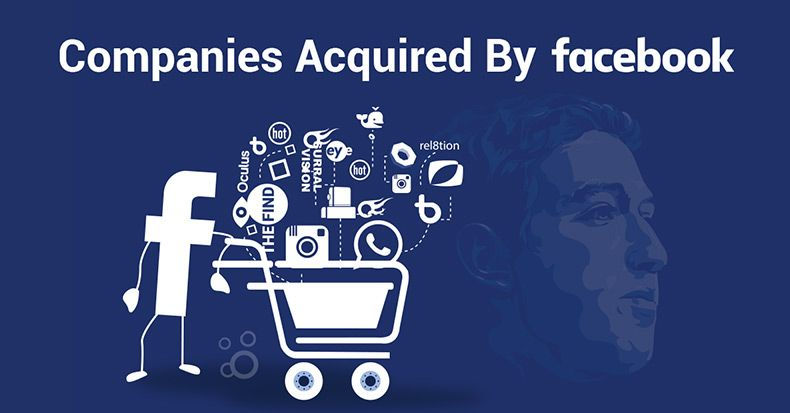
Data privacy has been another issue that has attracted ire from many governments and has even influenced the electoral process in many countries. Facebook suffered a data breach in 2014 in which a firm called Cambridge Analytica used unauthorized personal data of 50 million US citizens to create a powerful software that could profile the users and predict their voting behaviour. This data was then used for targeted advertising which at times included fake news, to sway voting behaviour. Facebook for 2 years failed to disclose the breach to the individuals or the regulators even though it was legally required to do so. Something more disturbing than data breach and fake news is Facebook’s attempt to launch a cryptocurrency called Libra. If the digital currency is widely adopted by Facebook’s 2.7 billion users then it will have more reach than any other currency in the world and will give Facebook dangerous power over the payment habits of its users. The currency will be backed by a reserve of four fiat currencies (USD, GBP, EUR, JPY) that will be managed by Libra Association that is largely made up of corporates. This will lead to erosion of monetary powers of central banks if a lot of people say in a country with relatively unstable currency choose to do transactions using Libra over the local currency. The central bank will lose its power to control money supply that can have devastating results for the local economy. Another problem is the inherent vulnerabilities of blockchain-based currencies like theft and bugs that make them unreliable.
Google controls 84% of mobile operating systems and 92 % of search engine market. While Google products are mostly free and have made life easier for many of its customers the real victims of Google’s market domination has been other competitors in the industries it operates in. In June 2017 it was fined $2.7 billion by EU regulators for its search practices that favoured its own product in the search results over other sellers. Google has also used its Android operating system to force mobile manufacturers to pre-install its apps on the phone while selling it, which makes it difficult for other apps to compete with preinstalled Google products. This has further entrenched Google’s product in the web browser, navigation app and video sharing markets. Google now controls 63% of web browser market, 67% of navigation app market and 73 % of video-sharing market.
With all these issues with Big Tech, it is no doubt that they need to be controlled, their way of doing business needs to be changed and the cost of these infractions needs to be costlier for them. Regulators have for years been lax on mergers in the tech industry which has been the main reason why these companies have grown in size to the point they are now. Facebook and Google have constantly bought out potential rivals to keep their position in the market safe. Much stricter scrutiny of mergers and acquisitions should be the first step in solving the problem of Big Tech. The number of fines on these companies has increased in the last 5 years especially in the EU. These fines while they are huge but they still are too small to make a dent on the profitability of these companies. There is a fear that these companies will accept these fines as the cost of doing business without changing their ways. This will make the whole idea of punishing them unfruitful. The obvious solution is increasing the current fine levels from 5%-10% of annual revenue to something much higher say 25%. The regulators could also look to make the executives or founders personally liable in case of multiple infractions and can also look to remove them from the companies board or any leadership role that they may hold.
The last measure should be using the Sherman Antitrust Act and Clayton Antitrust Act to break up the Big Tech. Breaking up such an important part of the American economy might sound very radical at first but it is nothing new. Antitrust acts have been used many times before on industries more fundamental to the economy than the tech industry and have lead to positive results. Most recently in 2000 Sherman Antitrust Act was used against Microsoft after it tried to monopolise the browser market by bundling Internet Explorer with Windows Operating System for free. Microsoft made it difficult for anyone to uninstall Internet Explorer and install any competing browser on its platform. The judge eventually ruled that Microsoft’s dominance in operating system market constituted a monopoly and ordered it to be broken up in two parts- one to produce an operating system and other to produce other softwares. Microsoft appealed the decision and eventually settled the case by agreeing to share programming information with third party companies. This judgement made sure that early internet was not dominated by one firm and paved the way for companies like Google and Facebook to grow instead of being stifled by Microsoft's monopoly power. This case shows that antitrust actions at appropriate times increases innovation in the industry.
Breaking up firms can also lead to benefits for consumers. As was the case with AT&T when its monopoly over telephone services was broken up in 1982. The breakup lead to a competitive market of selling phones something that was not allowed by AT&T as it preferred renting its phone to consumers. AT&T also did not allow users of its service to connect phones manufactured by other firms. All these restrictions were dropped after the breakup and lead to huge benefits for the consumers. Similarly break up of today’s tech giants will lead to creation of competing firms in various industries that will give better deals to consumers and lead to more consumer benefits.

Support for regulators and government to do something to reign in these tech giants has increased since the 2016 election. Donald Trump called Amazon a no-tax monopoly and has also accused Google of manipulating millions of votes. On the other side, Hillary Clinton said that Mark Zuckerberg should pay a price for what he is doing to American democracy. Of the current set of candidates running for Presidency at least five including Bernie Sanders and Tulsi Gabbard have said that they will support breaking up of tech companies. Trust in tech companies among the general public is also very poor in US and UK according to a survey by YouGov which said that 40% of the respondents do not trust the tech giants to lawfully manage their data. With political pressure from both sides and falling public trust in them, it is increasingly difficult for these companies to just lobby their way out of this one. After two decades of unfettered growth and impunity, regulations are finally catching up to these tech giants and an unfavourable election result in 2020 might be what it will take to unravel their destructive way of doing business.


Comments